
From Packaging to Assembly: Delta Robot Applications in Industrial Automation
By Omar Abdulhadi, PhD · October 12, 2026
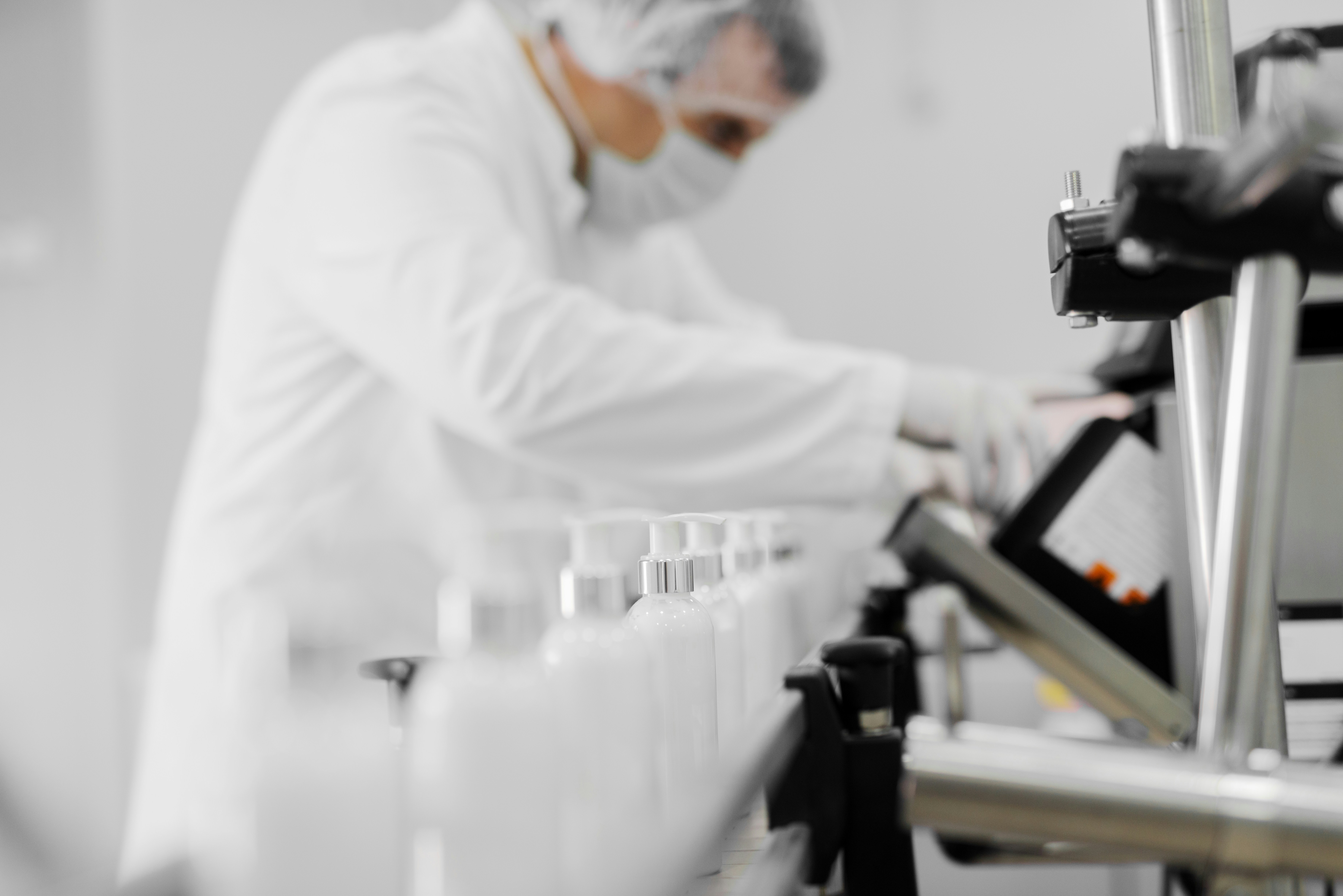
Delta robots are usually introduced with one picture: a spider-like machine flicking products off a conveyor into a tray. That picture is accurate, but it undersells how many industries use the same basic motion. Anywhere light products need to move quickly and precisely from one place to another, a delta robot is worth a look.
This article is a map. It walks through the main delta robot applications industry by industry, lists the typical tasks in each, and links to deeper pages where you can see how a cell is configured. If you want the mechanics of why the parallel design is fast, read Delta Robots vs. Traditional Robots first.
What Makes a Task a Good Fit for a Delta Robot
Before the tour, a quick filter. A task is a strong candidate when most of these are true:
- Light products moved at high rates, often off a moving conveyor.
- Short, repetitive motions in a compact area below the robot.
- Placement that matters: trays, cavities, cartons, or fixtures with tight positions.
- Frequent product changes that make fixed, single-purpose machinery expensive.
- Overhead space above the line, with the floor kept clear for people and cleaning.
The Adeeb Delta Robot is specified for 100+ picks per minute (25 g payload over 305 mm of travel), ±0.05 mm repeatability, a 1000 mm diameter workspace, and quick-change tooling that swaps an end-effector in under 30 seconds.
Delta Robot Applications at a Glance
| Industry | Typical delta robot tasks |
|---|---|
| Packaging (cross-industry) | Tray loading, carton and case packing, multi-pack collation, flow-wrap infeed |
| Food & beverage | Sortation, tray loading, bakery and confectionery handling, quality grading |
| Pharmaceuticals | Blister pack loading, vial sorting, syringe packaging, multi-SKU changeover |
| Electronics | Component placement, PCB handling, device sub-assembly, defect rejection |
| Consumer goods | Cosmetics packaging, variety packs, high-mix kitting, end-of-line packing |
| Recycling & sorting | Material type sorting, contamination removal, high-speed recovery |
| Agriculture | Produce grading, size sorting, ripeness classification, gentle handling |
| Medical devices | Disposable device assembly, syringe and inhaler component assembly |
| Light assembly | Press-fit and snap-fit insertion, gasket placement, sensor sub-assembly |
Packaging: The Classic Delta Robot Application
Packaging is where most delta robots earn their keep, across every industry that ships small products. Typical tasks are primary packing (product into tray or blister), secondary packing (packs into cartons or cases), and pattern changes between collated, nested, and random-to-ordered layouts.
The hard parts are gentleness and changeover. S-curve acceleration and configurable jerk limits keep fragile products intact, and programmable tray maps change patterns without mechanical retooling. See the packaging solution for a typical cell configuration.
Food & Beverage
Food lines combine speed, fragility, and strict hygiene. Typical tasks include pick-and-place sortation, tray loading, carton packing, bakery and confectionery handling, and inspection with reject. Benchmarks compiled on our food & beverage page from PMMI, AMD Machines, and Food Engineering Magazine put manual picking at 14–20 picks per minute per worker, against 120–200 picks per minute for a delta robot.
We have already covered hygiene and ROI in Delta Robots in Food Packaging, and showed a confectionery example in Boxing Chocolate Bars with Autorun.
Pharmaceuticals
In pharma, the delta robot’s job is usually high-speed, zero-misplacement handling: loading tablets or capsules into blister cavities, sorting mixed vials, and packing syringes. Lines switch formats often, so recipe-driven changeover matters as much as speed.
Regulation shapes the whole cell. The Robot Controller is designed to support 21 CFR Part 11 audit trails and electronic signatures, with the manufacturer still owning the overall compliance claim. Details are on the pharmaceuticals page.
Electronics
Electronics work asks for precision at speed: component placement, PCB handling for electrostatic-sensitive boards, multi-step device assembly, and inspection with defect rejection. Several robots often share one cell, so deterministic synchronization through the EtherCAT Master is as important as the robot itself.
For context, the benchmarks on our electronics page, drawn from ALLPCB, IPC, and AMD Machines, put manual defect rates at 1,000–2,000 PPM against 10–50 PPM for automated lines.
Consumer Goods
Consumer goods lines live with SKU proliferation: seasonal products, promotional packs, and retailer-specific formats. Typical delta robot tasks are cosmetics packaging (irregular containers, delicate labels), multi-pack and variety-pack assembly, high-mix kitting, and end-of-line packing.
The value here is flexibility more than raw speed. Quick-change tooling and recipe-driven patterns keep changeovers short. PMMI and Packaging World figures on our consumer goods page cite a 35–42% reduction in direct labor hours with packaging automation.
Recycling and Sorting
Material recovery facilities use delta robots to pull targeted materials or contaminants off fast-moving conveyors. Typical tasks are material type sorting, contamination detection with reject, and high-speed recovery. Vision classifies each object, and conveyor tracking times the pick.
Benchmarks on our recycling page, from AMP Robotics, EverestLabs, Recycleye, and Robotics 24/7, put human sorters at 35–40 picks per minute and robots at 60–120. Our first customer works in this space: read the plastic recycling case study.
Agriculture
Post-harvest processing is a natural extension of sorting. Typical tasks are fruit and vegetable grading, size sorting into packaging tiers, ripeness classification by color and texture, and gentle transfer into packs. The robot has to match the vision system’s speed without bruising the product, so smooth motion profiles and soft-touch end-effectors matter.
The agriculture page cites manual fruit sorting at roughly 300 units per hour (Interact Analysis, GREEFA, and agricultural research journals).
Medical Devices
Medical device production pairs electronics-level precision with pharma-level traceability. Typical tasks are high-volume assembly of single-use devices such as lancets and test strips, needle-to-barrel syringe assembly with controlled force, and multi-part inhaler assembly with vision checks at each stage. Every unit needs a production record, which the Robot Controller and EtherCAT Master support with logged, timestamped process data. See the medical devices page.
Light Assembly
Delta robots are not only packers. With a precision gripper, a 6-axis force/torque sensor, and an optional rotary axis, they handle light assembly: press-fit and snap-fit insertion, gasket and seal placement, and small sensor or ECU sub-assembly. Force feedback catches over- and under-insertion in real time, and per-part force curves are logged for traceability.
This is where delta robots meet the automotive and electronics supply chains. The assembly solution shows the typical cell, with servo presses, screwdrivers, and dispensers synchronized over EtherCAT.
Where Delta Robots Are Not the Answer
A delta robot is a specialist. Heavy payloads, long reach, deep bins, and tasks that need full tool orientation belong to articulated or SCARA arms. The good news is that the Robot Controller drives both, so one software stack can cover a mixed line.
FAQ
What are the most common delta robot applications?
Packaging and pick-and-place are the most common: tray loading, carton packing, and sorting off a moving conveyor. Inspection with reject, recycling sorting, and light assembly are growing uses of the same platform.
Can one delta robot handle several products on the same line?
Yes, if changeovers are designed in. Recipe-driven programs switch patterns without code changes, and quick-change tooling on the Adeeb Delta Robot swaps end-effectors in under 30 seconds.
Are delta robots suitable for assembly, or only packaging?
They suit light assembly well. With force sensing and an optional rotary axis, a delta robot can perform press-fits, snap-fits, and component insertion while logging force data for each part.
Find the Right Application for Your Line
If one of these tasks sounds like your bottleneck, start with the Adeeb Delta Robot page for the full specifications. Then book a demo to see the robot handle products like yours, or contact our engineers to talk through your line layout, product mix, and target rate.